Equipment rental management excel template: bookings, deposits and billing
The columns a rental desk needs for bookings, availability, deposits and GST invoices, and where that sheet still double-books a unit.
How to start an equipment rental business in India: one fleet, GST as a service, and a deposit that is not the hire.

Nimish Gahlot
Founder, Empulse Labs
· Updated · 15 min read
Published
Updated · 15 min read
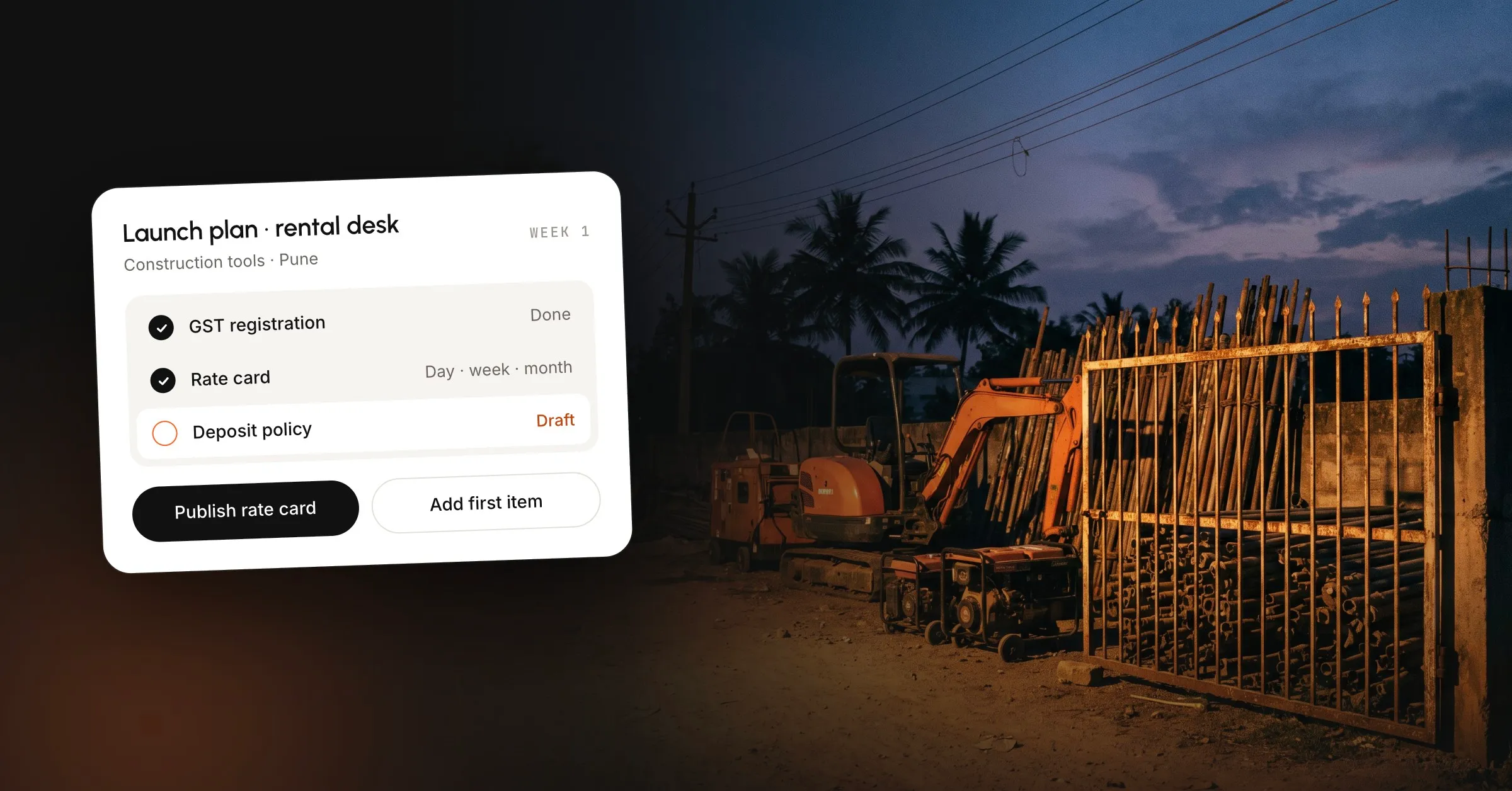
How to start an equipment rental business in India is four checks on the first hire: a booking for a unit you know is free, a deposit that is not the hire, a GST invoice a contractor will accept, and a late unit that stays blocked until it is back. Buy one class your local hirers already ask for. A wider fleet and a rate copied from another district can wait until a unit has gone out and come back under those rules.
A sheet and a WhatsApp thread, used as the only record, lose the second booking or the deposit. Tax and stamp questions on your papers go to your CA. The statute and GST Council text below is as of October 2026.
The counter takes a date from one list, so the same serial is not promised twice. The deposit sits off rental income, the tax invoice shows the hire, and a late unit stays blocked until a person records a return, a longer hire, or a swap onto a free unit.
Search suggestions split the business into tool, heavy, construction, medical, audio, and small. A plate compactor can come back the same evening, a 20-tonne excavator needs a trailer and a hirer who pays on a running bill, and a wedding tent needs a crew. Choose the segment you can run from the counter.
Spend two weeks on jobs you can drive to. Ask contractors, site supervisors, and owners who already hire out what they had to bring from outside the district last month. A dealer sells the machine that is sitting on the floor, so buy the class those hirers say was short.
Start with that one class. Several of one tool can be swapped when one is late. With a single excavator there is nothing to swap onto, so you extend the current hire, you miss the next site, or a person places a sub-rent with its own rate and delivery. Write every enquiry you cannot fill, and use that list when you choose the second unit.
Keep three pots separate: the price or the share a lender will not fund; registration, insurance, and consumables due before the unit earns; and cash for the weeks between the hire and the payment. Compare three lenders on margin, tenure, and a quiet month. The instalment is still due in a monsoon week when the unit sits in the yard.
| Route | Cash you put in | What you still carry | Fit |
|---|---|---|---|
| Buy outright | The price, then fuel, service, and insurance | Idle weeks, and resale that depends on hours and service papers | You have the cash, and a hirer who will keep this class out |
| Finance | The margin the lender leaves with you, then the instalment | A fixed instalment in a quiet month, and a hypothecation on the asset | The class bills often enough that the third pot covers a slow month |
| Used | A lower price, plus the workshop bill the advert did not show | Unknown hours, and a transfer if the machine is a registered vehicle | You have seen it run, and you have the papers or you have priced the gap |
Service records and the hour meter are what a later buyer, and an insurance claim, will ask for. Keep them from the first month, in the same name as the invoice.
“How to start laptop rental business” is its own search, including corporate rental and city names, so give that search its own launch. Each machine is a serial with a charger and a bag, and a missing charger is its own line. The hirer is often a company on a monthly purchase order. The service code is SAC 997315, leasing or rental of computers, in the GST Council’s scheme of classification. Image the disk before it goes out. The threshold and the deposit line below still apply. The customer is that company, and the rate card is written for a monthly order.
A proprietorship can start: PAN, a current account in the trading name, and GST when you are liable or when a hirer will not book without a tax invoice. A partnership, LLP, or company is the step when liability or a lender requires a separate person.
Udyam registration is voluntary, and it is an MSME certificate. Investment and turnover bands are on the ministry’s site and they have been revised, so read them there.
Section 22 of the CGST Act, in the text the GST Council hosts, makes a supplier liable to register when aggregate turnover in a financial year exceeds twenty lakh rupees, and ten lakh rupees where taxable supplies are made from a special category State. That file is the 2017 Act. Later amendments changed which States sit in the lower band.
Notification No. 10/2019-Central Tax exempts a person engaged only in the supply of goods whose turnover does not exceed forty lakh rupees, with exceptions for some goods, some States, and anyone who must register for another reason. It has been amended since 2019. Read it as amended.
Schedule II of the Act treats a transfer of the right to use any goods, for consideration, as a supply of services. Hiring equipment out is that kind of supply, so the forty lakh rupee exemption for a person who only sells goods does not set the registration line for a yard. Voluntary registration, before you cross twenty lakh, is what lets you invoice a contractor and take credit on the machine. Confirm your State, and whether section 24 already forces registration, with your CA before the first invoice.
Heading 9973 is leasing or rental services with or without operator. The lines a yard actually prints, from that same classification annexure:
The rate sits in Notification 11/2017-Central Tax (Rate), as amended, which the Council publishes with its other rate notifications. As of October 2026, the Council’s press release on the September 2025 changes says service rate changes take effect from 22 September 2025. Under heading 9973 it records one move: leasing or rental, without an operator, of goods in the 40 percent slab, from 28 percent with input tax credit to 40 percent with input tax credit. The press release records no single percent that covers a backhoe, a laptop, and a tent. An operator on the hire can put the invoice on a different entry. Have your CA classify the line before a rate is printed on the card.
The invoice names your GSTIN, the hirer’s GSTIN when they have one, the SAC, the taxable hire, and the tax. CGST and SGST, or IGST, follow place of supply, so a machine on a site in another State goes to your CA before you choose the tax on the invoice. The deposit stays out of that taxable value while it is still refundable.
A business hirer who must deduct tax on rent of plant and machinery will deduct it before paying. The rate and the yearly limit depend on who pays and on what the payment is for. Collect the certificate and let your CA match it to the hire.
The current account, the GSTIN, the insurance, and any registration certificate should be the person who invoices. Keep hire invoices, service bills, and hour readings from month one. When the goods leave and you are not selling them, a delivery challan names the serial or the quantity, the hirer, and the site, and the tax invoice carries the hire. Ask your CA whether that trip also needs an e-way bill.
Hirers already pay a district rate. Your costs tell you which of those jobs to refuse. A range on a machine marketplace describes another yard’s month, so this week ask three yards and three contractors what they last paid for your class, by the day, the week, and the month, and date the notes.
Put day, week, and month on the card. A month priced as thirty daily rates will not be taken, and a daily rate that ignores transport loses the short hire across the district. Write what the rate includes: hours, fuel, operator, transport, attachments. The floor is the cost of sending that unit, including weeks it sits. Put the discount for a long hire on the card, and keep the short hire at the daily rate you printed.
On a dry hire the hirer brings the operator and the fuel, so an idle day has no wage on your side. On a wet hire you send a person, and often the fuel, and that wage is yours in a quiet week, so the quote has to cover the wage and the fuel. Start dry unless hirers in your district expect an operator and you can keep that person on paying work. The same choice can change the GST entry, and your CA sets that line on the invoice.
A deposit given for a supply counts as payment for that supply only once you apply it as consideration. That is the proviso to the definition of consideration in section 2(31) of the CGST Act. Until a person applies it or refunds it, keep it off the hire. In India the amount is usually money already received, by UPI, transfer, cash, or cheque. Record the reference on the order.
Circular No. 178/10/2022-GST covers a deposit you keep because the customer paid and never took the supply. Damage, a missing part, or extra hire is when that amount leaves the deposit line. A no-show fee, and any pure penalty, goes to your CA before it is printed as tax.
Set the figure before the counter. A fixed amount for a class, a percent of the order, or a higher amount on the expensive serials will cover most fleets. Size it from a repair or a replacement, and from the hirer’s history. A regular with a clean file can sit lower. A fresh number at every handover leaves the deposit open to bargaining.
| Line | What it is | While it is only held | Who moves it |
|---|---|---|---|
| Hire | The rate for the time out | Taxable value on the invoice | The invoice, in the week the hire starts or ends |
| Deposit | Money you may have to return | Off the hire | A named person, after the return is compared |
| Damage or a missing part | A charge, once someone has looked | A new taxable line, or a credit note if you reverse it | The person who compared the two photo sets |
| Extra hire | More time, at the rate already agreed | Further hire | The person named in the late-return rule |
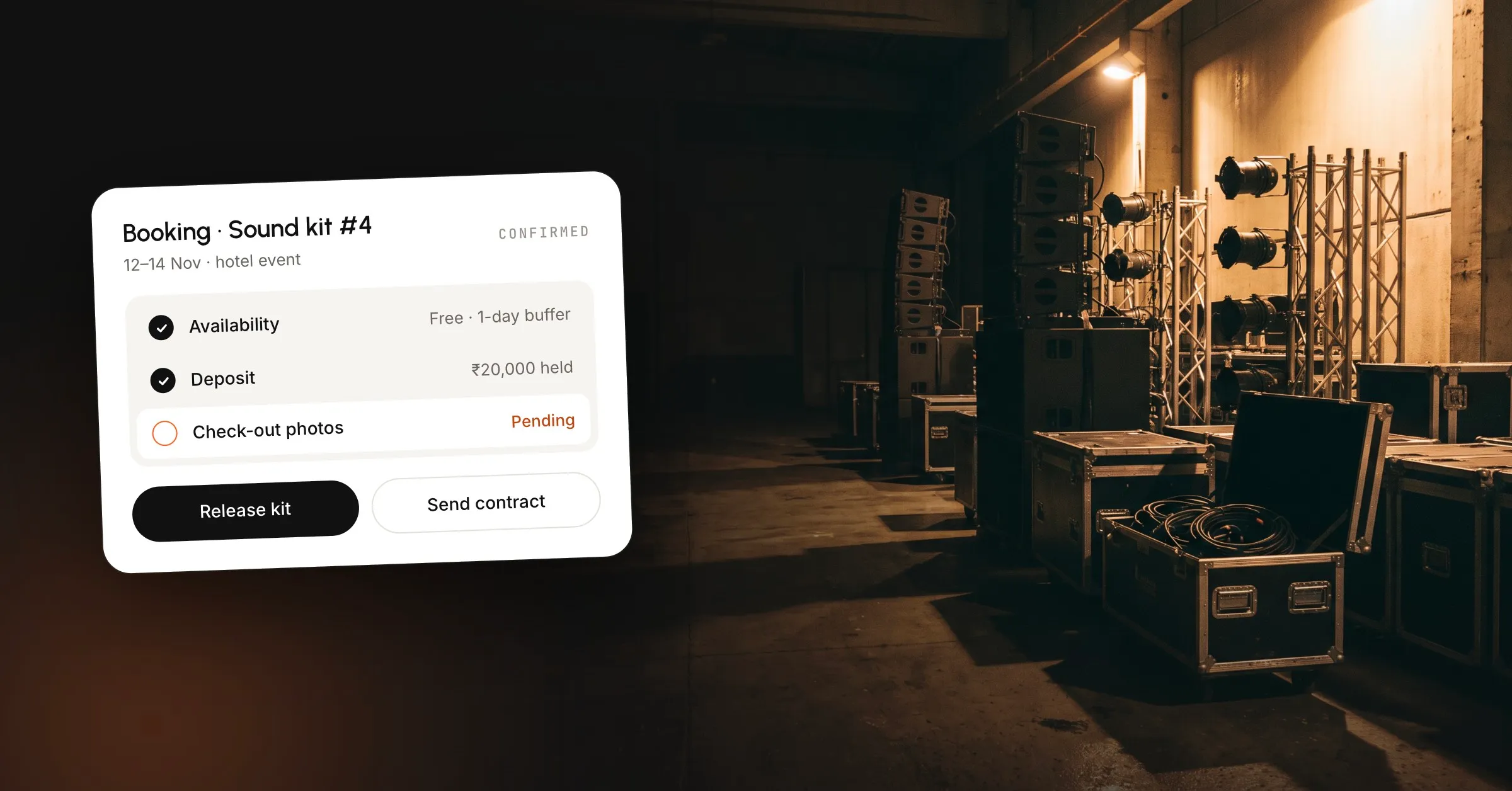
Release the deposit when the return is clean and that person says so. A message may warn that a charge is coming, and the money moves only when that person posts it. Photos on the way out and on the way back are what make a deduction explainable. The buffer, the fee, and who may post it are the equipment rental late return policy. One sentence of that rule goes on this agreement, so the hirer saw it before pickup.
One page is enough for a tool, a compactor, or a laptop. A long plant hire uses the same headings and a schedule of serials. The hirer sees it before the deposit and before the unit moves. Stamp duty is your state’s Stamp Act, and the amount is on that schedule. Notarising the page still leaves the due-back time for you to write on the page.
Under the Indian Contract Act, 1872, handing goods over to be used and returned is a bailment. The hirer has to look after them and send them back when the hire ends. The page is where the time, the place, and the permitted use are written.
Store the signed page on the order, including the copy that went out on WhatsApp before the unit moved.
If the machine travels on a public road as a motor vehicle, ask the insurer for the third-party cover that road use requires, and keep the registration and the policy in the same name as the invoice. A machine that stays on site needs its own answer from the insurer, and you write that answer on the serial.
Also ask for a quote on the metal, on liability to other people, and on transit when the unit goes on a truck. A larger site will want the certificate before entry. A damage waiver priced as an extra line on the order is a charge on the hire. The policy has to be in your name, and the premium is the figure that insurer quotes for this machine, this year.
A unit in the workshop is in service until someone clears it, and the list behind a WhatsApp reply has to say so. If the repair lives only in a conversation, the next hirer is offered a machine that will not start.
Read the hour meter on the way out and on the way back, and write both on the order. Put the service interval on the serial before the second hire. The workshop sets the window, and the counter leaves the unit in service while someone is waiting at the gate.
The first jobs come from contractors and supervisors you can reach, from the dealer who hears about a breakdown, and from an owner nearby who is full this week. Take that overflow as a sub-rent, on your agreement and your deposit, or write it as a missed rental.
Use one phone number and one WhatsApp Business number. Put a Google Business Profile on the yard, with the classes you own. Read an aggregator’s commission before you depend on it. The repeat hire follows a unit that arrives, a message whose rate matches the invoice, and a deposit that returns when the check is clean.
Keep the four checks on one list.
Free means the unit is back, checked, and not already promised, so a unit due back tomorrow is still out today.
This Monday is a worked day with no client behind it. You hold six plate compactors and one mixer. A contractor messages for a compactor from Thursday to Saturday.
The list shows four on rent, one in service with a split plate, and one free. You quote the daily rate on your card for three days, and you mention the weekly rate only if they might keep it into next week. The deposit is the fixed amount already written for that class, taken by UPI, reference saved on the order, off the hire. The one-page agreement goes in the same thread before Thursday. The challan names the serial and the site. Saturday’s due-back time includes the hour you need to check the plate before a Monday hire of that serial.
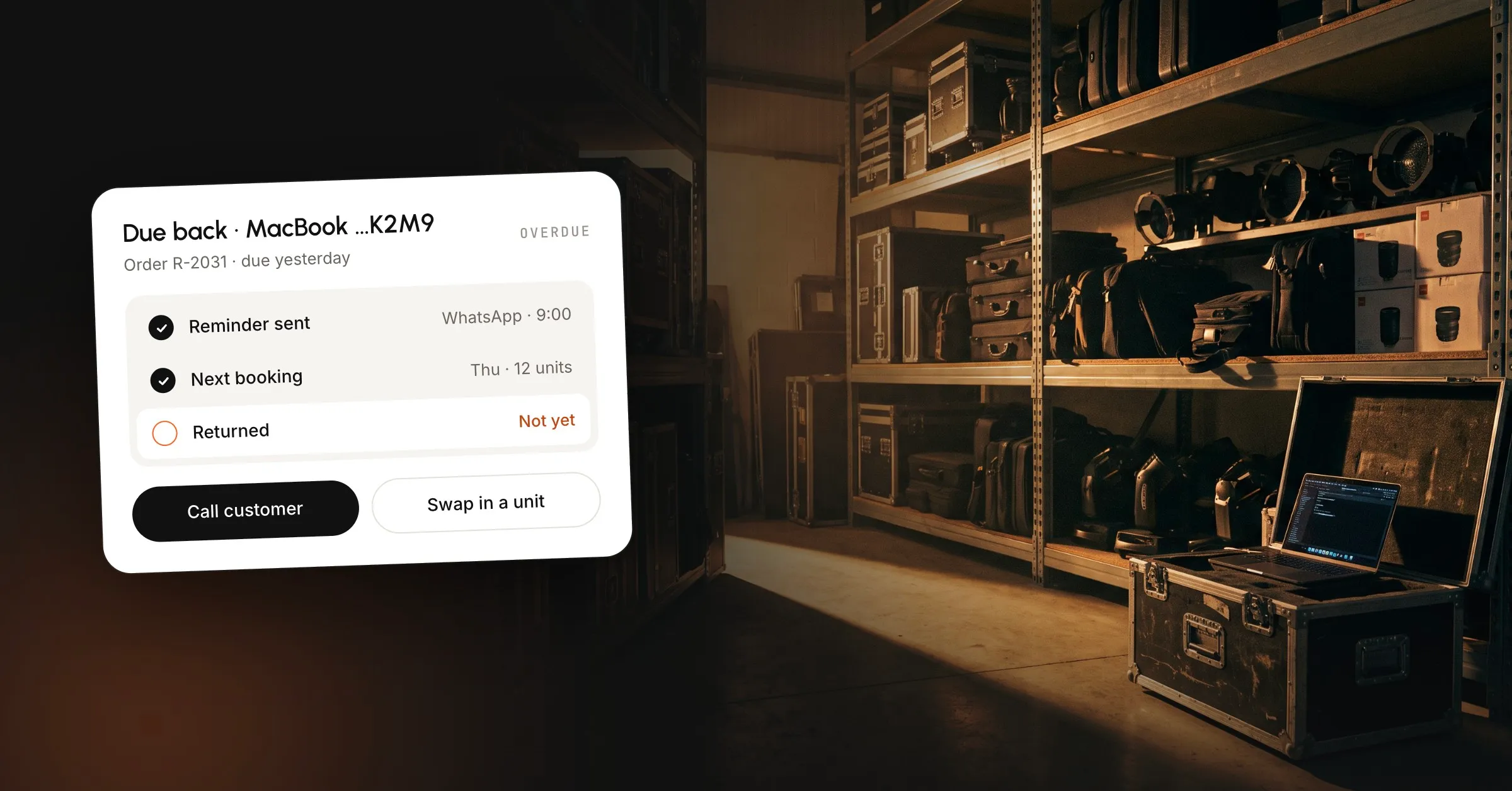
If Saturday slips, the unit stays on the outgoing order through the grace period, and you mark it free only once it is back and checked. What you may charge, and whether another compactor can move, is the late-return procedure linked above.
A yard in Dubai starts with a licence, mainland or free zone. Fee tables stay on the authority’s current schedule.
The UAE government taxation page says value added tax is levied at 5 percent. Register with the Federal Tax Authority when taxable supplies cross the threshold they publish. The tax invoice covers the hire, and a refundable deposit is its own receipt until you apply it. Confirm that split with a tax agent before an India invoice is copied into dirhams. A site will ask for the trade licence and the insurance certificate, so send both.
A draft reply can say which serials the list shows as free. It will offer a mixer that is in the workshop if nobody wrote that down. A person confirms the rate, releases a deposit, posts a damage charge, and marks a unit free. The photos sit on the order first.
The equipment rental firm on our rental businesses page is the payment side of this. Billing sat in an old flat-file system with no reminders, and the ERP vendor can take 15 days to answer. The pilot is one week of payment reminders on WhatsApp and email, at day 25, day 28, and a call at day 35, beside that ERP. The aim is that no invoice is left to memory, and the page says the results are still to come.
If the counter says yes on WhatsApp while the sheet still shows yesterday, we map that workflow. We build it on the tools you already run, for sales and operations, and you keep what we build. A build is one system, live in 3 to 6 weeks, with the setup fee back if it does not work in 45 days. How a build runs is the engagement.
A lender may fund most of a machine. The instalment still leaves in a week the unit sits in the yard. You need the share the lender will not fund, insurance before the first hire, and cash for the weeks before contractors pay. A sheet and a WhatsApp number are cheap. The fleet is not. People who search for a no-money start have usually left out that third pot.
Shop and Establishment law is the state's, not a central licence for hiring out equipment. If you open a yard, keep staff, or publish shop hours, ask that state's labour department whether the establishment has to be registered. It sits beside GST and beside Udyam. A single machine hired from a village plot is still a question for that office.
Identity, a quote or invoice for the machine, bank statements, and often a margin already in your account. Tenure, the unpaid share, and what happens in a quiet month differ by lender, so take three quotes before you sign. The instalment is a fixed cost in a week the unit does not bill. Price that week before you price the hire.
A photo identity, a phone number you have already reached them on, and a GSTIN or PAN when they are a business and will want a tax invoice or deduct tax. If they drive a vehicle, take the driving licence. Take the site address or the work order so you know where the unit went. The agreement is signed, and the deposit is recorded, before the unit moves.
E-invoicing is a turnover test the government notifies for a PAN, not a form every new yard files on day one. Under the line, a tax invoice from your GST account is what the contractor's accounts team expects. Once the PAN crosses the notified turnover, business invoices need an invoice reference number. Your CA will see that on the GST portal before a PDF gets rejected.
A proprietorship can open a current account and raise a GST invoice. You remain personally liable for the loan and for a loss on a site. An LLP or a private limited company, registered with the Ministry of Corporate Affairs, earns its place when a lender or the size of a possible loss makes that liability the wrong shape. The form does not bring the first booking.
The columns a rental desk needs for bookings, availability, deposits and GST invoices, and where that sheet still double-books a unit.
How to write an equipment rental late return policy, set a buffer, and chase the unit before you cancel the next booking.
AI for MSME India pays back on Tally and WhatsApp desk jobs. Sensors and forecasts wait until the data exists. What to run first, and what not to buy.
Book a 30-minute call. We'll map the workflow costing you the most hours and tell you honestly whether AI can fix it.
Book a 30-min call