Tally Prime for a manufacturing company: what it handles, and when you need more
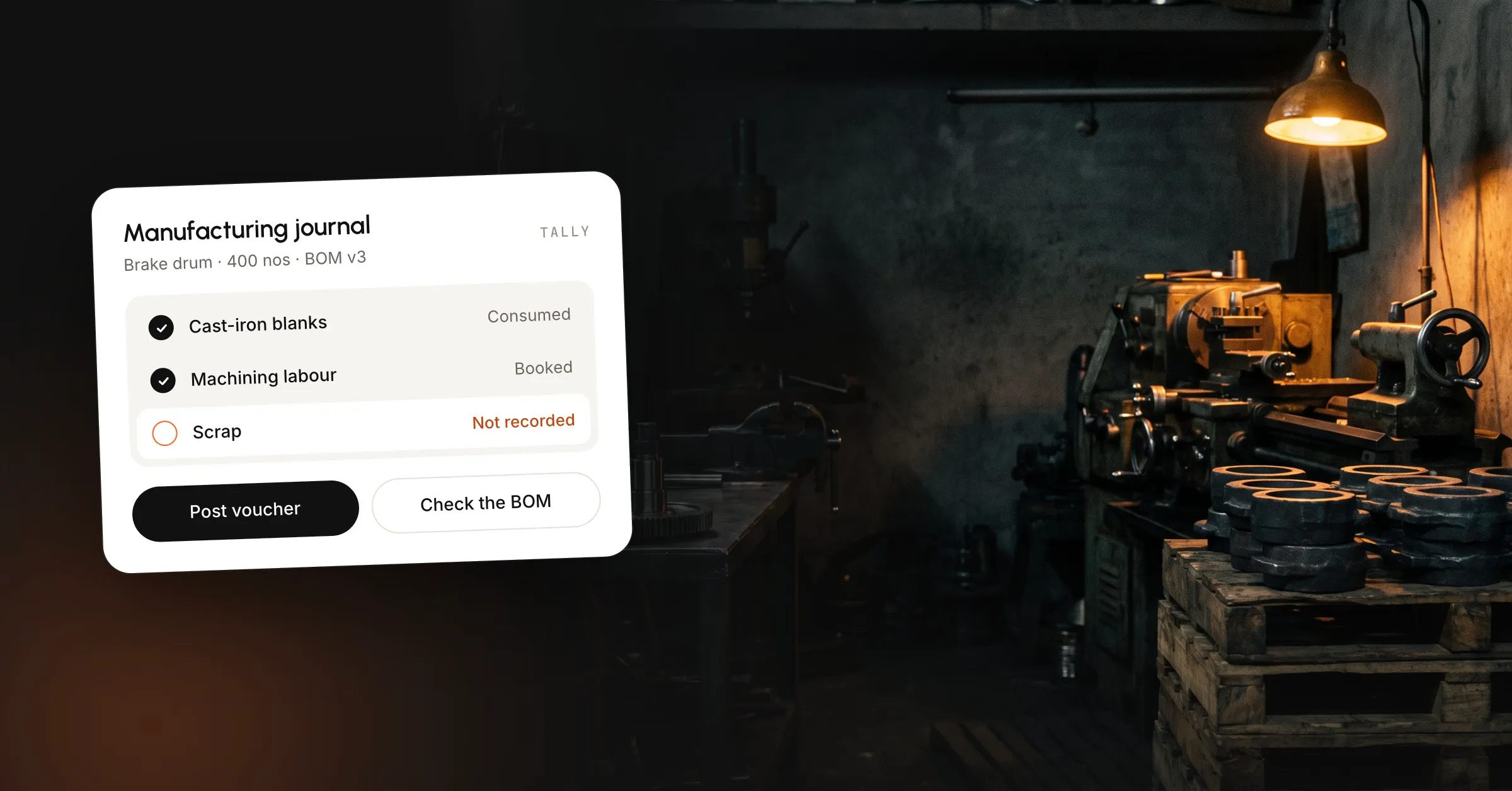
Tally Prime posts the batch, the bill of materials and the job-work challan. A schedule is a different system. The clicks, and where to stop.
AI for MSME India pays back on Tally and WhatsApp desk jobs. Sensors and forecasts wait until the data exists. What to run first, and what not to buy.

Nimish Gahlot
Founder, Empulse Labs
· Updated · 14 min read
Published
Updated · 14 min read

AI for MSME India pays back when it takes a document or a question you already have and drafts the next step for a person to approve. That document is a dealer purchase order, a quote, a vendor bill, an overdue ledger, a buyer asking where the order is, or a report pulled from Tally. Cameras, vibration sensors and demand forecasts are a later purchase: they wait until you have the history they learn from.
Two products are sold under the same phrase. One reads documents and ledgers you already keep, and stops when a line is unsure. The other watches a machine or a camera and predicts a failure, a defect or next month’s orders. Orders on the desks we see arrive as a WhatsApp photo, a PDF or an Excel sheet. The books are Tally, Busy or ERPNext, and the day’s plan is a sheet or a board. Production hears about a booking after someone has typed it.
As of October 2026, the Reserve Bank of India’s notification classifies an enterprise on plant and machinery or equipment and on turnover, citing gazette S.O. 1364(E). A micro enterprise is up to ₹2.5 crore of investment and ₹10 crore of turnover. Small is up to ₹25 crore and ₹100 crore. Medium is up to ₹125 crore and ₹500 crore. The band is wide enough that a 30-person auto-parts unit and a multi-plant company can both sit inside it, so they should not buy the same system.
The Office of the Principal Scientific Adviser hosts the World Economic Forum’s AI playbook for India’s SMEs. Its interviews found most SMEs “aware that AI deployment could benefit them but they are not sure how,” with money in Tally or Zoho and production records in spreadsheets. A plant that already has a historian on every line and a labelled defect library is a different buyer.
Start with a job a person does every day, where the record already exists, and where a wrong guess is expensive. The table is the filter we use before anyone talks about a model.
| Job | What you already need | First result | Stop if |
|---|---|---|---|
| Dealer PO to a draft sales order | Party and item masters | A draft someone approves | New item, rate change, missing quantity |
| RFQ to a priced draft | Rate card or last accepted price | Estimator signs before it is sent | New routing, or a price under the floor you set |
| Open purchase-order chase | The PO in the books | A promised date written down | Price, quantity, or a date that hits a customer job |
| Overdue dealer statement | Ledger ageing | A promised payment date | A dispute, a deduction, or a relationship call |
| Where is my order | A status someone already keeps | Running, waiting on material, or ready | The buyer wants a date nobody has agreed |
| Question on live books | One source, read only | The rows behind the answer | The question would write into the books |
| Vision, sensors, forecast | History you may not have | A later project | No labels, no breakdown log, no booked hours |
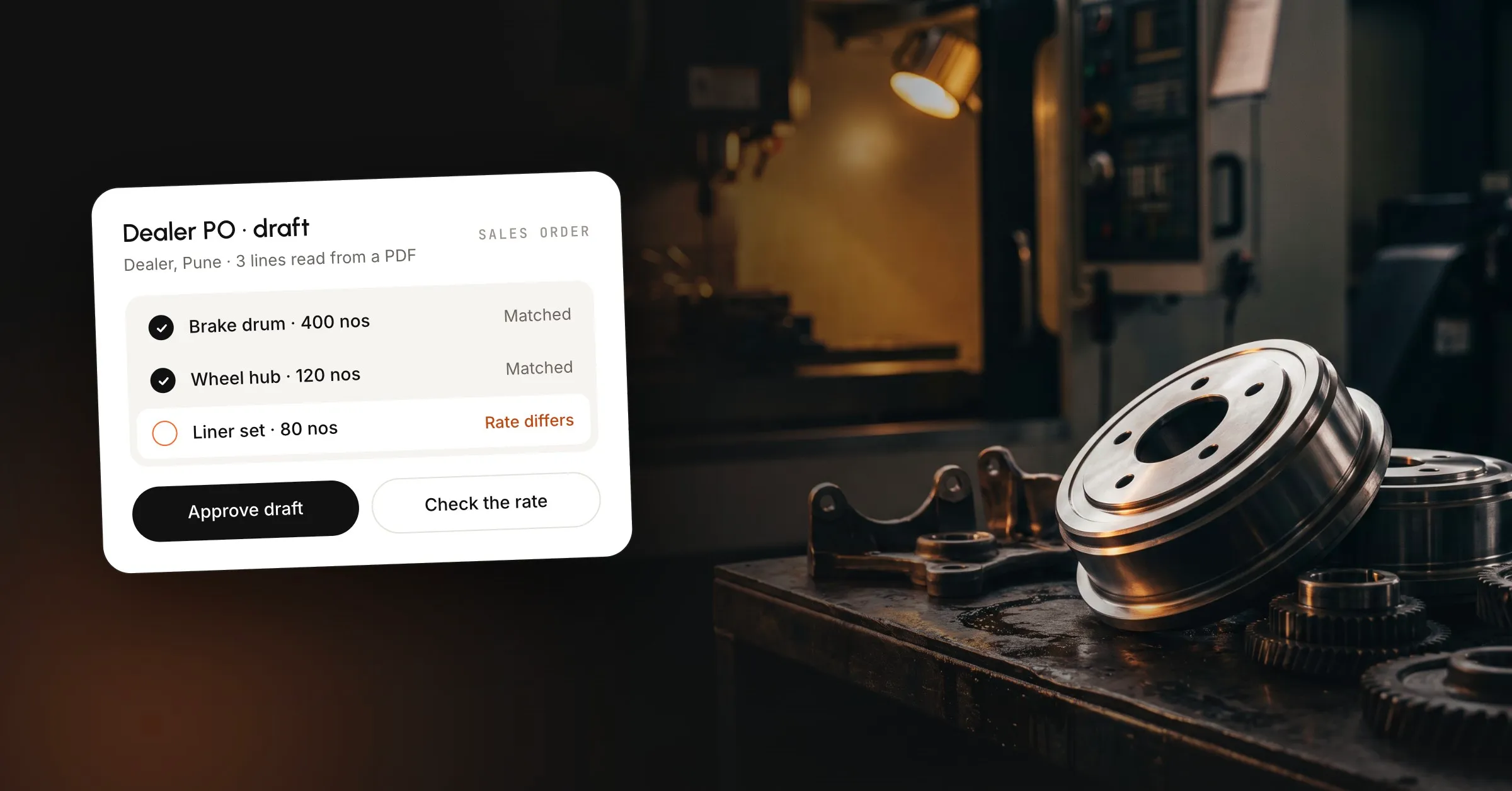
A dealer purchase order becomes a draft sales order when party, item and rate match. A line that is new, priced differently from the last accepted rate, or missing a quantity waits. GST stays on its own line from your item master. Nothing posts until a named person approves the draft, including the quiet lines. We wrote the field-by-field path, the duplicate-PO stop and the Tally voucher this lands in, in purchase order to sales order automation. Read that before you scope the first build, because this page does not walk through the keystrokes again.
An enquiry works the same way, one step earlier. The draft uses the rate card or the last accepted price, with GST and the usual terms shown. The estimator signs the margin, and above a limit you set the draft stays unsent. A shop that prices every job from a fresh drawing has no last price to stand on, so the useful version is a search of the last similar job, handed to the estimator.
Vendor follow-up starts from purchase orders you have already saved. The chase asks for an acknowledgement and a promised date, and writes the date down. A change in price or quantity, or a slip that hits a job you have promised a customer, comes back to the buyer, and the chase leaves the purchase order unchanged.
Collections start from outstanding in the ledger. A statement goes out on your WhatsApp Business number, and a promised date is logged. A dispute, a short payment or a party the owner wants to call stays with your team, and so does the decision to allocate cash.
Job status is a read: if the stage already lives on the Excel board or in the ERP, the reply can say running, waiting on material, or ready to dispatch. Any date in that reply is a promise, so the planner sets it. Choosing which machine runs the job is scheduling, and that work stays out of the first build.
The free WhatsApp Business app stores a profile, a catalogue, greeting and away messages, and quick replies. A reply that reads your books uses the WhatsApp Business Platform on the number dealers already message. The field-level path for an incoming purchase order is in the order-entry article linked above.
Owners ask the same few questions on Monday: which dealers ordered less, what is short against orders already booked, and who is overdue past the limit you set. The answer should come from rows in Tally or the ERP, and show those rows. Five questions you actually ask are enough for that Monday check of the books.
The owner can ask in the language the team already uses, including Hindi, and the figure still has to point at a voucher. If stock in the books and stock on the floor disagree, the report will repeat the disagreement, so fix the count before you ask a model to explain it.
A shortage note against orders already booked can name the item and draft a purchase order at the last rate and vendor. It goes out only after a person says yes. A full materials plan, with lead times and a finite schedule, is a later system.
Tally’s own AI is the first thing to check, because you may already be paying for it. Docs by Ira reads a printed or digital document and prepares a draft voucher in TallyPrime. The FAQ says it is for a valid Indian licence with active TSS, on TallyPrime Release 7.0 or later, and that a freemium registration imports up to 100 pages across two months. You review the draft, and the tool does not post the voucher on its own. The get-started page, updated 25 September 2026, asks for Release 7.1 or later. Those two help pages disagree, so open the one that matches the release you run before you register.
The same FAQ says handwritten documents are not supported. A photo of a dealer indent, which is how many orders actually arrive, is outside that tool. Docs by Ira can also create a party or an item master while it builds the voucher if the master is missing. Keep that switch in front of an accountant: a new stock item, created because a code looked unfamiliar, is how the item master fills with duplicates. Our builds stop and show the candidates without creating a master.
Docs by Ira drafts a voucher from a printed or digital file, and floor planning, vendor chases and buyer replies stay outside it. If a printed bill is the only pain, start there and spend nothing else on a second product. A WhatsApp photo plus a rate check is a larger desk than the plug-in.
Pick one job and score it before you look at software.
Run that one job until the approver trusts the draft, then add the next. A second workflow is faster because the masters and the log already exist. The manufacturing page is this filter for a factory: quotes, purchase orders, job status, and what we will not automate in the first build.
Payback is arithmetic you refill with 25 working days and three numbers from your own desk, in place of a percentage from a brochure. These illustration figures are not a plant we timed, and ₹250 an hour is not a wage survey. Replace all three.
| Line | Your figure | Illustration |
|---|---|---|
| Orders keyed in a day | Count them | 12 |
| Minutes to read, type and check one | Time one batch | 6 |
| Loaded cost of that person’s hour | Salary plus what your books already load | ₹250 |
| Hours in a month | Orders × minutes / 60 × 25 | 30 |
| Rupees of keying in a month | Hours × hourly cost | ₹7,500 |
If the approver still spends two minutes on each of those 12 orders, that is 10 hours, or ₹2,500 at the same illustration rate, and about ₹5,000 of keying is what actually disappears. A subscription plus the time spent fixing bad drafts can cost more than that.
Count credit notes, rework or returns last month that started as a bad code or a bad quantity, and multiply by what one of them cost. If you cannot count them, leave that cell blank. We will not put a percentage on an error rate we have not measured on your orders. A near miss between two similar item names is the failure that hurts, and a draft that stops costs less than a voucher that posted. Consultancy pages often put lakhs on a sensor pilot and do not show an invoice. That sensor pilot is a different purchase from this ₹5,000 of keying.
Sensors, vision and forecasting are real work, and a 30-person unit should not buy them in month one unless the log they need is already on paper you can trust.
A reminder that a press is due for a service is a calendar. It needs a machine list and a due date, and it can sit beside the desk jobs. Predicting a bearing failure needs a reading, vibration or temperature or current, tied to a history of what actually broke. If hours and breakdowns were never booked, the model has nothing to learn, and fixing the log pays off whether or not you add a sensor.
The playbook reports a 40% reduction in unplanned breakdowns and a 30% decrease in maintenance costs for an unnamed Indian gearbox maker, without the sensor invoice, the machine count or the baseline. Those percentages describe that maker, and a price for your shop needs figures this case does not give. The purchase waits while orders are still retyped.
A camera helps when a person could see the defect, the part passes a lens often enough to matter, and you can show the model many good parts and many bad ones. A structural or chemical failure does not appear in a photograph. Twenty photos from a phone are not a training set, so the first month is usually labelling. Running the model beside the line helps when the connection drops, and a shared rig in a cluster is how the public write-ups expect this to spread; both still wait on the labelled parts.
A forecast learns from order history that means one thing in one ledger. WhatsApp confirmations, a sales sheet and Tally quantities that disagree will train the model on the disagreement. Clean the history before you buy the forecast. You can already ask, from stock and open orders, whether you buy an item every month while the books show four months on hand, and a report on those rows answers the question.
Finite capacity, a master schedule and a digital twin assume routings, calendars and a bill of materials someone maintains. If the supervisor still plans Thursday on a board, those tools will plan a factory you do not have. Sequence them after the booking is a voucher a person approved.
Start with one purchase, the smallest one that removes an hour you have already counted.
An agent, in current sales language, takes a goal and walks several steps. For a factory those steps stay narrow: read the message, match the masters, draft the voucher, and wait. An agent that also sends the price, books the job and tells the dealer a date has taken over decisions a person should hold. Run one workflow until it is reliable, then add a second.
A job description, a product caption or a Hindi social post is a fair use of a general chat tool, and it is rarely the expensive hour in a plant. The order, the quote, the chase and the report cost more. A hiring product is a different buyer, and we do not sell one.
As of October 2026, the Digital Personal Data Protection Rules, 2025 have been notified, and the notice, consent and security-safeguard duties are not all in force yet. Rule 1 says rules 3, 5 to 16, 22 and 23 come into force eighteen months after the 13 November 2025 notification was published. Build the habit now, before those rules come into force. The Digital Personal Data Protection Act, 2023 is about data that identifies a person. A dealer’s mobile number, an employee’s record, and a contact saved on a chat are in that set. A vibration file from a motor is outside that set unless the file also names a person, and a camera frame with a worker’s face is in that set.
Do not paste a customer list, a payroll sheet, a rate card or a drawing into a public chat. Strip names and phone numbers before a general tool summarises a sheet. Prices and drawings should not train someone else’s model even when they do not identify a person. Prefer a system that reads your Tally, shows the rows and keeps a log. Your CA or counsel should read the commencement clause against the latest gazette before you treat a date as a deadline.
As of October 2026, the Ministry of MSME schemes page describes the Champions scheme as real-time support through a portal, and it says that support uses AI, data analytics and IoT. That is the ministry answering enterprises, and the bill for your order desk or a camera on one press stays with you. We did not find a reimbursement a single unit can claim for a WhatsApp-to-Tally workflow. Cluster testbeds and national compute programmes come after a desk you can count this week. If a vendor says a scheme will pay for their product, ask for the guideline and the sanction.
Count one week of the desk that hurts. If the hours are real and the masters exist, start there: purchase-order drafts, or an RFQ the estimator signs, on your number and your books. That first workflow goes live in 3 to 6 weeks. If it does not work in 45 days, the setup fee comes back. You own the system. Sensors, vision and a forecast wait until their log is honest.
The same order-entry shape shows up on a wholesale trading desk. For a factory, the first build and the stops are on the manufacturing page. The wider set of systems for sales and operations is under services.
No. Those stay the books. A useful system reads the party master, the item master and outstanding, and parks a draft for someone you name to approve. Your accountant still closes the month the same way. Replacing the ledger with a new ERP is a different project, and it is the wrong first purchase when the pain is retyping a dealer purchase order or an enquiry.
It should not. A status that already sits on the job record can go out as running, waiting on material, or ready to dispatch. A price, a discount, a complaint, or a date the planner has not agreed stays with the person you named. The free WhatsApp Business app only stores quick replies. A reply that reads your books needs a log of what was sent and who allowed it.
The desk jobs below assume a rate card or a last accepted price, and an item the order can match. A shop that prices a new routing from a drawing needs the estimator on almost every line, so the saving is a search of old jobs, not a draft that posts. Use that search only when those jobs are already filed somewhere the estimator can open.
Not for a document workflow. You need the masters you already keep, and one document or question you can count this week. Forecasting, vision and predictive maintenance are the jobs that stall without history. That history is labelled defects, sensor readings tied to breakdowns, or hours that were actually booked to the job. If those hours were never booked, a model cannot invent them.
You do. The system runs on your WhatsApp Business number and your Tally, Busy or ERPNext, and you keep it. We do not train a public model on your rate card, drawings or customer list. A log should show who approved a draft, when, and what they saw. Ask any vendor where the files sit, who can open them, and whether your documents are used to train a model.
One workflow, on the number and the books you already run, is what we put live in 3 to 6 weeks. Most factories start with purchase-order drafts or an RFQ the estimator signs, then add status replies, vendor follow-up or collections. If that first workflow does not work in 45 days, the setup fee comes back. A sensor pilot, a new ERP and a forecast are not on that clock.
Tally Prime posts the batch, the bill of materials and the job-work challan. A schedule is a different system. The clicks, and where to stop.
A dealer PO on WhatsApp should become one Tally sales order. Here is the draft a person approves, and the lines the system must not guess.
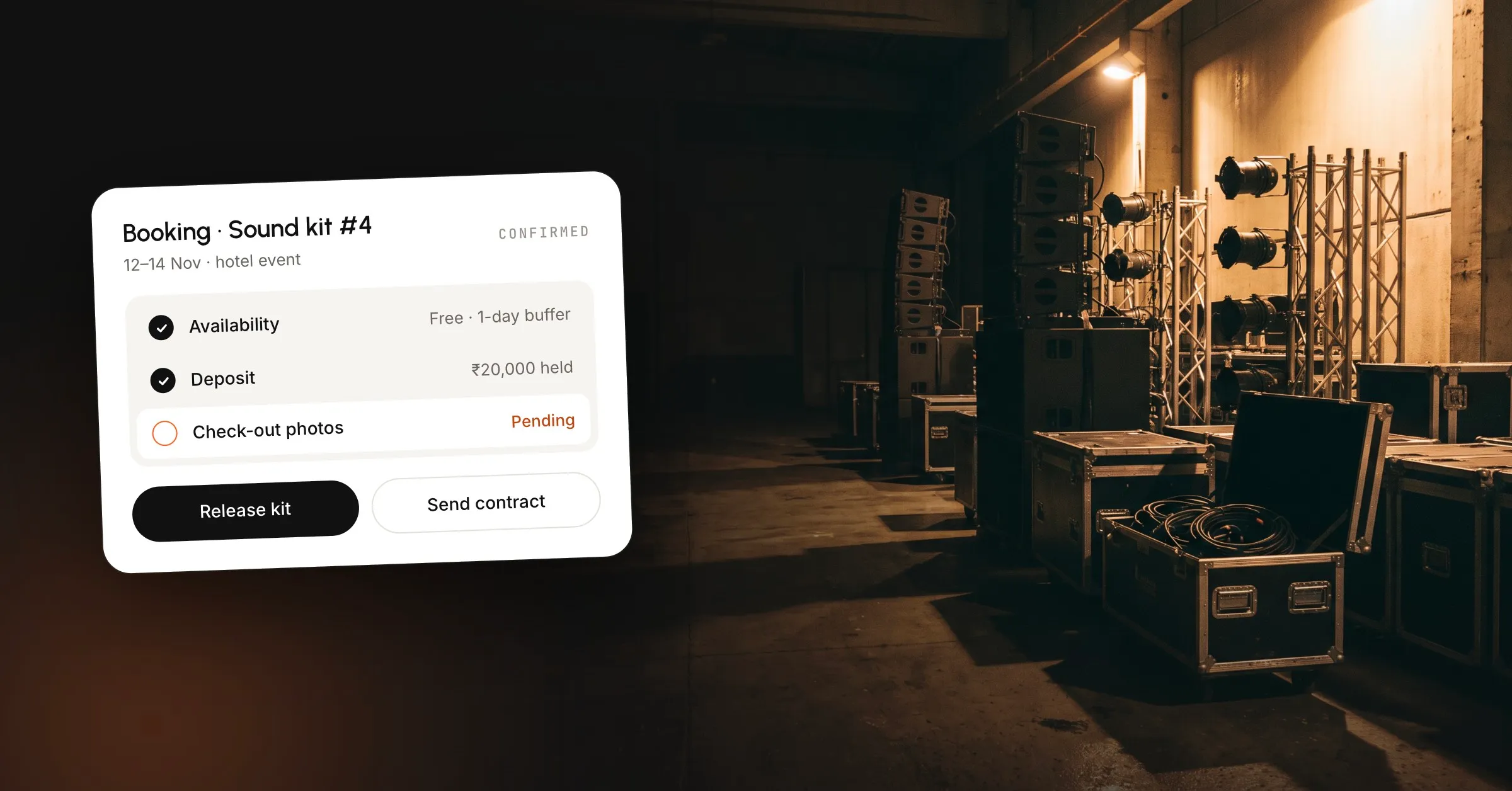
The columns a rental desk needs for bookings, availability, deposits and GST invoices, and where that sheet still double-books a unit.
Book a 30-minute call. We'll map the workflow costing you the most hours and tell you honestly whether AI can fix it.
Book a 30-min call